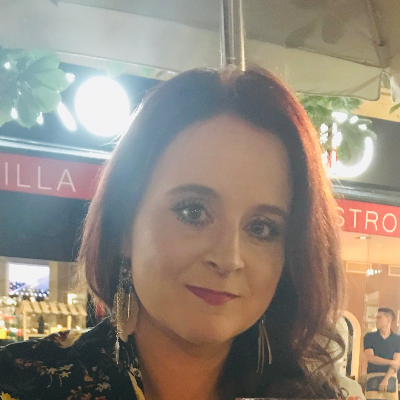
Qualification BSc Integrative Counselling – Person-Centred, Choice Theory/Reality Therapy, Integrative approaches
MA in Addiction Recovery – Underlying patterns, relapse prevention, recovery models
Specialist Cert in CBT – Evidence-based techniques for anxiety, depression, trauma
Specialist Cert in Trauma-Informed Therapy – Safe, paced trauma work
Fully insured | IACP ethical guidelines | Ongoing CPD
Experience4+ years in CBT
Private Practice Experience
I have worked with adults in private practice settings, providing one-to-one CBT and integrative counselling. In this role, I have supported clients presenting with:
Anxiety disorders (generalised anxiety, social anxiety, panic disorder, health anxiety)
Depression and persistent low mood
Trauma (including single-incident and complex trauma)
Work-related stress and burnout
Relationship difficulties
Low self-esteem and confidence issues
Grief and loss
Life transitions (career change, retirement, separation, bereavement)
My approach in private practice is collaborative and client-led. I work with each client to identify their goals and tailor CBT techniques to their specific needs.
Employee Assistance Programme (EAP) Experience
I have also worked with clients through Employee Assistance Programme (EAP) services. This setting taught me to work effectively within brief, solution-focused frameworks while maintaining high standards of confidentiality and professionalism.
In EAP work, I supported employees across various industries with:
Workplace stress and burnout
Anxiety related to performance or job security
Work-life balance difficulties
Conflict with colleagues or managers
Personal issues affecting work (relationship difficulties, financial stress, health concerns)
This experience gave me a deep understanding of workplace dynamics and the importance of practical, time-sensitive interventions.
Approach I draw from several therapeutic approaches to meet each client where they are.
Person-Centred Therapy
At the core of my work is the belief that you are the expert on your own life. I am not here to diagnose, label, or tell you what to do. Instead, I offer three conditions that research shows are essential for therapeutic change:
Unconditional positive regard – I accept you as you are, without judgment. There is nothing you can share that will shock me or make me think less of you.
Empathy – I work hard to truly understand your experience from your perspective, not mine.
Congruence – I am genuine and honest with you. I do not hide behind a professional mask or use jargon to create distance.
This means our work together is collaborative. You set the pace. You decide what feels important to talk about. I am here to walk alongside you, not to lead from the front.
Choice Theory
Choice Theory is based on a simple but powerful idea: all behaviour is an attempt to meet one of five basic needs:
Survival (safety, food, shelter, health)
Love and belonging
Power and achievement
Freedom and autonomy
Fun and enjoyment
When you feel anxious, depressed, or stuck, it is often because one or more of these needs is not being met in the way you would like. Together, we can explore:
What do you really want (not what you should want)?
What are you currently doing to get it?
Is it working?
What could you do differently?
Choice Theory shifts the focus from "What is wrong with me?" to "What do I need, and how can I get it?" This is empowering and practical.
Cognitive Behavioural Therapy (CBT)
CBT is the practical, evidence-based backbone of my work. Once we understand what you need (through a Person-Centred and Choice Theory lens), CBT gives you the tools to get there.
CBT helps you see how your thoughts, feelings, and behaviours are connected. For example:
Thought: "I'm going to mess this up."
Feeling: Anxious, panicked.
Behaviour: Avoid the situation entirely.
Result: Short-term relief, long-term reinforcement of the fear.
By identifying and gently challenging unhelpful patterns, you can learn to respond differently. This is not about "positive thinking" – it is about realistic thinking that actually helps you live the life you want.
Trauma-Informed Principles
I also integrate trauma-informed principles into all my work. This means I assume that any client may have a history of trauma, and I shape my approach accordingly:
Safety first – We go at your pace. You are always in control.
Trust and transparency – You will know exactly what we are doing and why.
Choice and collaboration – You decide what we work on. Nothing is mandatory.
Empowerment – The goal is not just symptom reduction. It is helping you feel capable and in charge of your own life.